Within the intensely competitive realm of today's serious drifting, victory is not merely solely a product of raw engine power or pilot bravado. Conversely, it has become a intricate discipline which necessitates a meticulous blend of choosing a time-tested car, arming it with the correct competition hardware, and, most essentially, grasping its live performance on the circuit through cutting-edge drift telemetry software. This definitive manual functions as your master plan starting from the very first idea of a competition vehicle right through to the final data-informed adjustments that transform a capable vehicle into a repeatable champion. We will delve deep into the art and science of car suspension tuning, illustrating how a modern drift tuning app like a dedicated telemetry system eradicates assumptions and delivers unparalleled clarity into your car's true performance.
The bedrock of any exceptional drift machine is, undoubtedly, the chassis itself. A select group of cars have attained renowned standing within the international drifting community due to their built-in handling characteristics, durable build quality, and the enormous ecosystem of aftermarket support available. Picking the correct car is the first and most important choice a builder will make. For instance, the the E36 generation BMW is commonly accepted as among the finest all-around drift cars of the modern era. Its near-perfect 50/50 weight distribution, combined with a rear-wheel-drive setup and extremely reliable six-cylinder powerplants, creates a chassis that is simultaneously forgiving for novices and incredibly competitive in the possession of a pro competitor. The successor of this philosophy, the BMW E46, improves on these strengths with a even more sophisticated frame, wider track for improved confidence, and even a greater degree of lock straight from the manufacturer. A distinct formidable contender in the pro arena is the Chevrolet Corvette C6.
This muscle-derived sports car brings a unique set of strengths to the sideways discipline, such as a light aluminum structure, a backwards-positioned gearbox and differential unit that aids in an ideal balance, and the tremendous torque of a big GM LS engine. This blend renders it an utter weapon on track, designed of initiating and sustaining long angles with apparently easy application of power. For drivers seeking outstanding bang-for-the-buck, the Nissan 350Z rises above as a excellent candidate. It arrives from the manufacturer with a stiff chassis, a effective original limited-slip differential, and the free-revving V6 motor that provides sufficient performance for mastering and advancing in the discipline. Its newer version, the Nissan Z34, brings further advancements in structural rigidity, steering geometry, and peak motor performance, establishing its position as a popular pick among professional drivers. Further historic vehicles that deserve mention encompass the lightweight unique FC generation RX-7, the most popular Nissan S13, the torque-rich SN95 generation Mustang, the electronic-equipped BMW E90, and the compact yet unbelievably fun and teachable Mazda MX-5. Every single one of these chassis provides a distinct palette of attributes, complexities, and capabilities, but they all share the core elements required to be transformed into a competitive sliding vehicle.
However, selecting the optimal car is merely the starting point. To access the complete potential of every of these machines, substantial modifications to the steering system and suspension systems are utterly non-negotiable. This is where the domain of precision aftermarket parts becomes sharp view. The most most impactful modification for a purpose-built drift car is the fitting of a maximum-angle angle modification kit. These engineered assemblies, such as those developed by performance brands like SLR Speed, are created to dramatically expand the car's available lock-to-lock rotation. A OEM road car is extremely constrained in how far its front wheels can turn, a design limitation for daily operation. In oversteer driving, conversely, extreme countersteering is continuously required to manage and hold a angle. An modification kit substitutes the stock steering knuckles, tie rods, and sometimes A-arms with components that enable the front tires to achieve degrees of turn over 70 or even 80 degrees, compared to a typical stock angle of around 40 to 50 °.
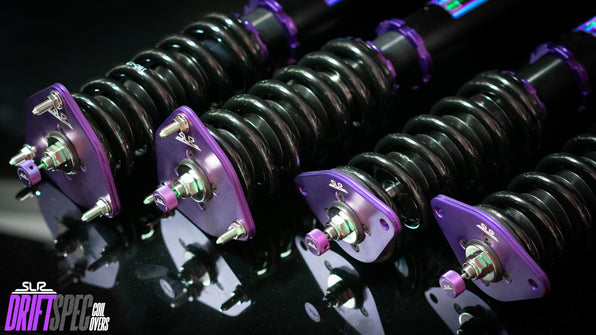
This tremendously increased lock provides the pilot with significantly more command during a drift, enabling it to be much simpler to begin a slide, hold it through a extended bend, and switch fluidly from one angle to another. The difference in handling is absolutely revolutionary. Combined with a correctly selected modification is the equally essential enhancement to the chassis's suspension. Off-the-shelf or including expensive road dampers are just not intended for the unique and extreme demands of sliding. A drift-spec set of suspension units is crucial. These engineered coilovers have specific piston tuning and spring stiffness that are optimized for the extreme weight transfer that is typical of aggressive driving. When a driver begins a angle, the vehicle's weight is thrown forcefully to the front of the bend. Optimal performance suspension handle this shift in a controllable fashion, permitting the vehicle to settle rapidly and providing the driver precise feedback through the controls and cockpit. They furthermore enable accurate adjustment of ground clearance, rebound and compression firmness, and weight balance, which are all key parts of optimizing the car's dynamics to a specific venue or piloting style. In combination, a top-tier angle modification system and a properly chosen set of drift-spec suspension units constitute the core hardware foundation upon which all later refinement is based.
Once the essential components is fitted, the following essential stage in the project is the detailed adjustment of the vehicle's suspension geometry. This is the domain of chassis dynamics adjustment, a methodology that can feel overwhelmingly complex to the beginner but is, in fact, the secret to converting a assembly of fast parts into a unified and controllable machine. The most critical element of suspension geometry for oversteer is certainly camber. Camber is the angle of the wheel relative to the perfectly straight line when looked at from the front-on of the vehicle. When the upper part of the wheel is tilted inward, this is referred to as inward tilt. For drifting, negative camber on the steering wheels is widely used and is seen as critical. The purpose is deeply tied to physics.
When a chassis is turning at extreme slip angles, the chassis rolls towards the outside of the corner. This lean forces the outside front wheel to lose its ideal contact patch with the track surface. By introducing an inward tilt, the wheel is pre-angled to account for this roll. As the chassis leans into the turn, the outside front tire becomes more upright against the track, optimizing its grip at the precise point when it is needed most for car alignment tuning steering authority. Commonly, front axle angles for a competition drift car vary from approximately -3 degrees to as high as -5 degrees or even more, contingent on the parameters of the chassis configuration, compound type, and driver preference. The rear axle tires also employ negative camber, but the settings are typically more modest and less aggressive than the front axle. Overly aggressive negative camber at the rear can result in the chassis extremely prone to oversteer and difficult to manage on throttle input, as it shrinks the usable contact patch of the driving wheels during forward acceleration. Therefore, rear camber settings are often in the range of -1 degree to -3 degrees, striking a delicate balance between providing enough cornering traction to aid in initiating and holding the drift while still keeping usable hook-up for power-down the bend. alignment is merely one component of the larger tuning equation, which furthermore includes toe, caster angle, and steer correction modification.
Toe setting is the direction of the wheels when viewed from above. Toe-in means the leading edges of the wheels are nearer together than the rear edges, while toe-out means the opposite. For oversteer, a modest amount of front toe-out is often run to sharpen the initial handling reaction, making the car feel more nimble and willing to start a slide. Rear axle toe setting is usually set to neutral or drift suspension tuning guide a incredibly small amount of inward toe to promote straight-line stability under acceleration. Caster is the frontwards or aft inclination of the steering axis when viewed from the side-on of the car. More caster improves self-centering and high-speed stability, and it additionally boosts negative camber effect during turning, which is very useful. Setting these parameters is a detailed interaction where a adjustment to one parameter can and often will influence the others. The conventional approach for tuning a car's suspension geometry for competition has long been a tedious endeavor of experimentation and feeling. A pilot or team would make a modification based on intuition, drive the vehicle on track, depend on the driver's personal perception and comments, and then introduce another tweak. This loop would repeat time after time until the car felt "right" or the available testing period ran out. This system is not just incredibly slow in terms of time and costs, but it is also fundamentally flawed.
Human perception is a infamously subjective measurement tool, affected by many elements such as exhaustion, changing track grip levels, weather, and merely the mindset of the pilot on that particular day. What feels "tail-happy" on one lap might feel "pushing" on the subsequent pass, resulting in confusing feedback and ineffective changes. This age-old challenge in vehicle dynamics optimization is precisely where modern engineering tools has stepped in to revolutionize the methodology.
The advent and integration of specialized drift telemetry software has brought about a completely new era for tuning and optimizing professional drift cars. These tools, exemplified by groundbreaking products like data acquisition tools, function by directly recording the actual dynamic behavior of the vehicle as it is operated on the track. In contrast to depending on subjective feel, these systems acquire measurable metrics on essential parameters such as shock absorber movement, corner velocities, acceleration forces, steering angle, and driver input application. This raw data stream is then processed by advanced software that can visualize and interpret the metrics in a actionable format. For the first time ever, tuners and builders can observe specifically what the vehicle is performing at every millisecond of a lap. This function changes the complete suspension tuning procedure. Imagine the aforementioned goal of dialing in the front negative camber for a given chassis. As an alternative to making a modification from -3 degrees to -3.5 degrees and then testing multiple runs to try and "sense" a improvement, a telemetry system can deliver real-time and clear information. The tool can display in a chart how the tire's contact patch is performing during the key phases of a drift: turn-in, holding the angle, and transition. It can show if the existing value is allowing the steering tire to keep ideal loading or if the tire is over-stressed on its external shoulder.
The system can then suggest data-driven advice for adjustment. Perhaps the information shows that the tire is even stressing its edge at -3.5 degrees of camber, indicating that even more inward lean, say -4 degrees, might be beneficial. Alternatively, the information might indicate that the tire is not coming up to temperature or that the inner shoulder is wearing unevenly, which could point to that there is excessive inward lean and a small reduction back to -3.2 degrees would be more optimal. This standard of granularity and practical intelligence was literally unimaginable in the era of exclusively seat-of-the-pants setup.
The effect of using a advanced vehicle dynamics tool extends much further than just optimizing camber. It functions as an priceless suspension tuning guide that is tailored to your particular car. When fine-tuning the damping settings on your adjustable dampers, instead of using vague tips or copying another driver's setup, you can employ the telemetry to analyze how the chassis is reacting in reaction to your changes. The software can graph the wheel movement path over a section of track, highlighting if the shocks are controlling the chassis motion effectively or if they are causing the car to become unsettled too much after a flick. It can help in pinpointing issues like excessive compression or topping out, allowing you to make educated adjustments to preload settings, rebound/compression rates, or ground clearance. This approach applies just as well to the detailed task of suspension geometry optimization. In addition to camber, the tool can offer data into how modifications to toe and caster angle are affecting the vehicle's balance during various parts of a drift. For instance, it can assist you to find the optimal amount of front axle negative toe for your particular steering geometry and driving technique by analyzing the response time of initial reaction and the predictability of the chassis at maximum countersteer. This transforms the tool an exceptionally powerful vehicle dynamics manual that is constantly updated by the live performance of your own vehicle on the circuit. It elevates the complete project from a subjective skill into a scientific engineering exercise.
Furthermore, the utility of a system like GripDial is not limited to experienced teams with extensive funding. For the club-level competitor, it functions as an amazing equalizer. It practically provides the builder with the insight of a expert suspension specialist without the associated cost. It accelerates the development time by giving unambiguous answers to problems that would traditionally take years of trial and error to understand. A builder can see how their individual vehicle behaves to specific inputs, building a more intuitive comprehension of vehicle dynamics in the journey. It additionally democratizes professional performance tuning techniques, allowing all drivers with the drive to perfect their vehicle to accomplish it in a systematic and effective way. This is especially significant in a discipline like drifting, where engineering knowledge has historically been a highly secretive asset among elite crews. Now, that power can be in the hands of every dedicated driver.
In conclusion, the path to building and dialing in the ideal competitive sliding vehicle is a multi-stage mission that seamlessly blends classic mechanical drift telemetry software wisdom with 21st-century digital tools. It commences with the strategic pick of a proven platform, followed by the integration of non-negotiable performance components like high-performance drift angle kits and correctly specified competition suspension units. The process then advances into the intricate phase of car suspension tuning, where parameters like camber angle, toe setting, and caster angle are meticulously adjusted to complement the chassis's upgraded capabilities and the driver's individual technique. Ultimately, and what genuinely differentiates the today's process from the traditional methods, is the integration of a sophisticated vehicle dynamics tool. This system removes the uncertainty and waste of only subjective adjustment by providing quantifiable, live telemetry on how the car is truly behaving. It serves as an indispensable engineering partner, a actionable alignment optimization handbook, and a all-in-one chassis development system. As a complete package, this complete approach guarantees that every aspect of the competition vehicle—from the pick of the platform to the final click on the suspension—is refined for peak performance on the competition venue. It signifies the complete evolution of the art of sliding, bridging mechanical car control with precise vehicle setup to create the ultimate competitive vehicles attainable.